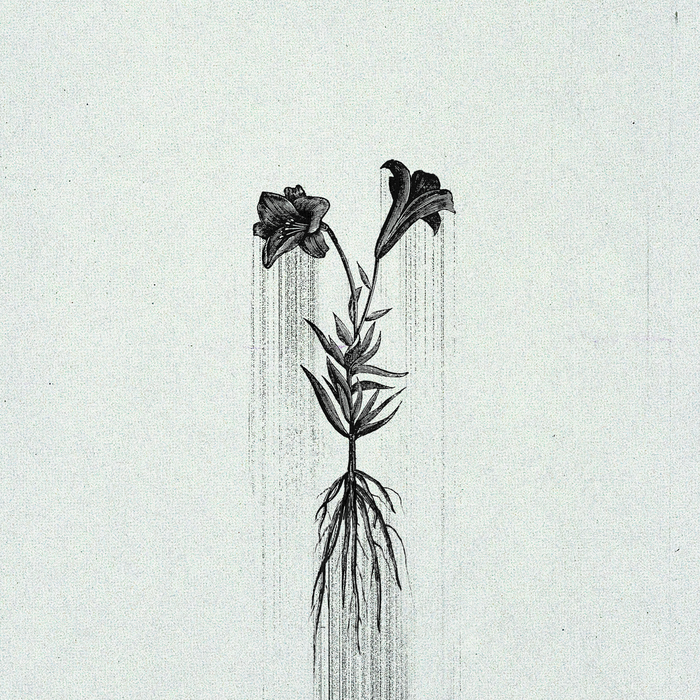
Penelope Trappes announces EP 'A Requiem: Æternum' and shares new single 'Home' via One Little Independent
A Requiem: Æternum out October 31st via One Little Independent Records
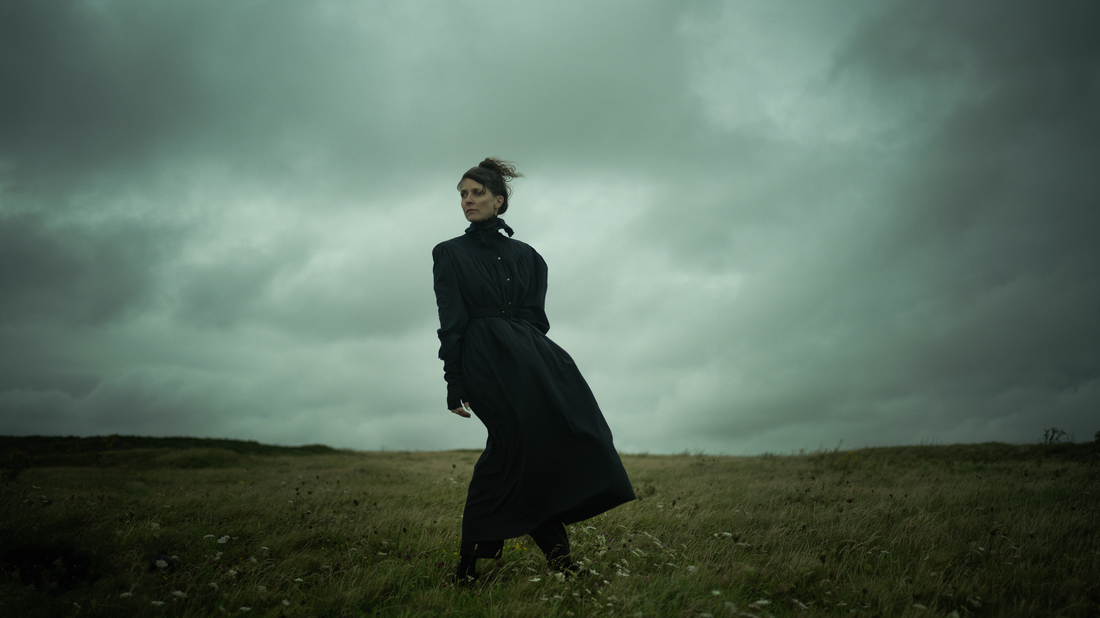
Live dates
13 Sep Kollektivet Livet - Stockholm, SE *
30 Sep 9MM - Berlin, DE
01 Oct ZEZ Festival - Zagreb, HR
02 Oct Rote Fabrik - Zurich, CH
03 Oct Sonic - Lyon, FR
05 Oct Marrumaka Festival - Sare Caves, FR
06 Oct Dabadaba - San Sebastian, SP
08 Oct Radioclube Agramonte, Porto, PT
09 Oct Le Klub - Paris, FR **
11 Oct Casa Montjuic - Barcelona, ES
12 Oct Teatro Linguaggicreativi - Milan, IT
18 Oct Zemlika Festival - Ance, LV
19 Nov Cottiers Theatre - Glasgow, UK
29 Nov St Matthias Church - London, UK
Live Visuals by Agnes Haus
*supporting Witch Club Satan
“There are passages of profound beauty and clarity amid the maelstrom” - Pitchfork
“Meditative moments of almost spiritual intensity shifting into caustic tumult” - The Wire
“This is a deeply personal record. But the magic of A Requiem is in the way Trappes carries us with her - out of the darkness and into the light” - Bandcamp Daily
Following the release of April’s critically acclaimed ‘A Requiem’, Brighton-based Australian artist Penelope Trappes returns with a selection of companion pieces that make up ‘Æternum’, out October 31st via One Little Independent Records. The accompanying material includes seven previously unreleased compositions, drawn from the prolific and emotionally raw recordings that birthed ‘A Requiem’.
‘Æternum’ will be available as a “black label” edition vinyl featuring a minimal all-black outer sleeve and black printed labels. Limited copies will include a unique, signed and numbered Polaroid photo of Penelope taken by Agnes Haus affixed to the jacket.
The title, ‘Æternum’ (Latin for “eternal”) evokes the record’s enduring thematic gravity and conceptual link to grief, healing, and the passage of time. “I wrote about 35 pieces in the sessions for A Requiem,” Trappes explains, “some as minimal studies, some as mood trials, and some as full songs that just didn’t seem to completely fit on the album. I love all these songs so much, but I think they are of a time and a place that maybe I don’t want to linger in too long for future releases, hence letting them out in the world loosely forever tied to ‘A Requiem’.”
The announcement comes alongside a video for ‘Home’ directed by Agnes Haus who says; “We had 1 week to shoot and edit this video, so we wanted to keep it simple. To film the first nostalgic half, I used a 90’s Hi-8 video camera that someone threw out on the street in London. The lightning is from this majestic electrical storm that happened while Penelope and I were in Byron Bay, Australia. The black windmill is in East Sussex. The idea was to connect Penelope’s past home with her new home.”
Written during an isolated period in the Scottish Highlands, Trappes composed these pieces across meditative, candle-lit sessions. Amidst deep introspection and a desire to cleanse long-buried trauma, she found herself drawn instinctively to the cello, despite no formal training. “The nerve-like strings of the cello became external chords of my vocal folds,” she reflects. “I scratched on them, leaned into them, and conjured all of the textures I could muster.”
The ‘Æternum’ tracks are rich with power and experimentation, extending the legacy of ‘A Requiem’ as a living, spiritual document. The new material spans sparse folk meditations, haunting choral drones, and lyrical exorcisms. These tracks reveal deeper layers of Penelope Trappes’ creative and emotional world, expanding the intimate universe of ‘A Requiem’. They feel like unearthed relics, ghostly and rhythmic invocations. There’s a sense of freedom in their unfinished edges and cathartic immediacy, as if Trappes is inviting the listener to peek behind the curtain. ‘Æternum’ captures the fragile beauty of an artist working in complete vulnerability and trust in her instinct.
Opening track ‘Requiem Æternum’ is a live-set staple and a striking reinterpretation of the Introit, or “opening prayer”, in a Requiem Mass (a Catholic Mass for the dead), serving as a solemn call to ritual. “For my live sets” she says, “I perform the whole album in order with only one change, this cover. Live, it feels like the perfect call to attention - something is about to happen…”
Of ‘Bleed’, a visceral articulation of epigenetic trauma, she sings “Trauma breathes / trauma feeds / your past it bleeds and bleeds”. She tells us “I felt when I was writing it that I was truly alone and self-orphaned, cutting myself off from my past.”
‘Litany’ addresses the numbing repetition of generational suffering but offers a momentary reprieve with the attempt to break free from that cycle. ‘Highland’, which was recorded in one take, is a study of folk music and an environmental response to writing in Scotland, visiting a land outside of the city.
Trappes coaxes a voice from the cello on ‘Desiderium’, foreshadowing its central role on key ‘A Requiem’ single, ‘Sleep’. ‘The Mercy of the Hagtisse’ invokes sacred pagan energies through a solitary drum.
Finally, ‘Home’ closes the collection. The only piano-led demo from the set, Trappes says “It recalls a lot of the elements of my work on ‘Heavenly Spheres’, which I didn’t want to revisit for the rest of the sessions, but the song, about my parents and Australia, encompasses emptiness and is made of pure love.”
‘A Requiem’ received support from the likes of Pitchfork, The Wire, MOJO, Uncut, Record Collector, Bandcamp Daily, NPR, PROG, Electronic Sound, The Line of Best Fit, Crack, Clash Magazine, Nowness, Stereogum, Gorilla vs Bear, Resident Advisor, Futurism Restated, BBC Radio 3’s Unclassified, 6 Music’s Forever Dark, New Music Fix Daily, Lauren Laverne, Deb Grant, Tom Ravenscroft, and many more. Penelope hosted a listening party and Q&A event with Cabaret Voltaire’s Stephen Mallinder. This summer, she embarked on her extensive EU and UK tour.
‘A Requiem’ is a musical service in honour of the dead, a sanctuary Trappes built for herself to explore familial chaos and history. “I was looking for an equilibrium between a ‘heaven' and a ‘hell’” she explained at the time, “screaming out to the wisdom of our foremothers - surfacing and leading me into true strength and beauty. I listened to the sorrow closely. Death is a part of our reality. Inevitable. Omnipresent. But nightmares can be beautiful”.
Despite formal vocal training in opera and jazz when she was younger, it wasn’t until after her daughter was born that Penelope began writing her own music. She says coming into music later has been eye opening, and she laments the fact that women past 30 are too often discarded by the music industry; “Creativity doesn’t go away when you get older, it flourishes, changes, grows like all of life,” she says, “it amazes me that this is still something for society to wrap their heads around.”
Penelope released her acclaimed trilogy, ‘Penelope One’, ‘Two’ and ‘Three’, on Fabric’s Houndstooth label. In between instalments of her ambitious trifecta, Penelope released a clutch of both experimental and more dreampop-oriented EPs. She demonstrated her versatility in the extended 25-minute deep-listening composition ‘Gnostic State’, and the arpeggiated electronics and minimalist songwriting on the ‘Eel Drip’ EP, which was accompanied by image and film inspired by Francesca Woodman’s 1970s series of nude self-portraits with eels. She also released an album of reworks, ‘Penelope Redeux’, with contributions by Cosey Fanni Tutti, Mogwai, and Nik Colk Void, and the cassette ‘Mother’s Blood’, a vocal-free meditative reinterpretation of ‘Penelope Three’ concluding with the live-scoring of a one-hour film at Sonica Festival.
Penelope’s fourth album, ‘Heavenly Spheres’, was released in 2023 on her own Nite Hive imprint, and was composed using just piano, voice and an old reel-to-reel tape deck during a two-week artist residency for Britten Pears Arts at the house where the composer, teacher and musicologist Imogen Holst lived in Aldeburgh, Suffolk. 2024’s ‘Hommelen’, the austere and beautifully severe result of her Halldorophone residency at EMS Stockholm, was released on Paralaxe Editions.
In the live realm, Penelope’s music expands into tidal waves and surges of tension with hypnotising gothic live visuals by Agnes Haus. Select shows are accompanied by a live band, and other times performing solo, she has shared the stage with the likes of William Basinski, Mary Lattimore, and HTRK, and she has extensively toured the UK, Australia, and Europe over the last five years, including a pivotal live performance with the London Contemporary Orchestra at Southbank Centre.